Two type IDs for SWIPT and only zero or one Energy Beamforming is needed
Date: 2024.04.10 11:29 Author: Joffrey LC
Multiuser MISO Beamforming for Simultaneous Wireless Information and Power Transfer. Jie Xu et.al. IEEE Transactions on Signal Processing, September 2014 (pdf) (Citations 387)
Quick Overview
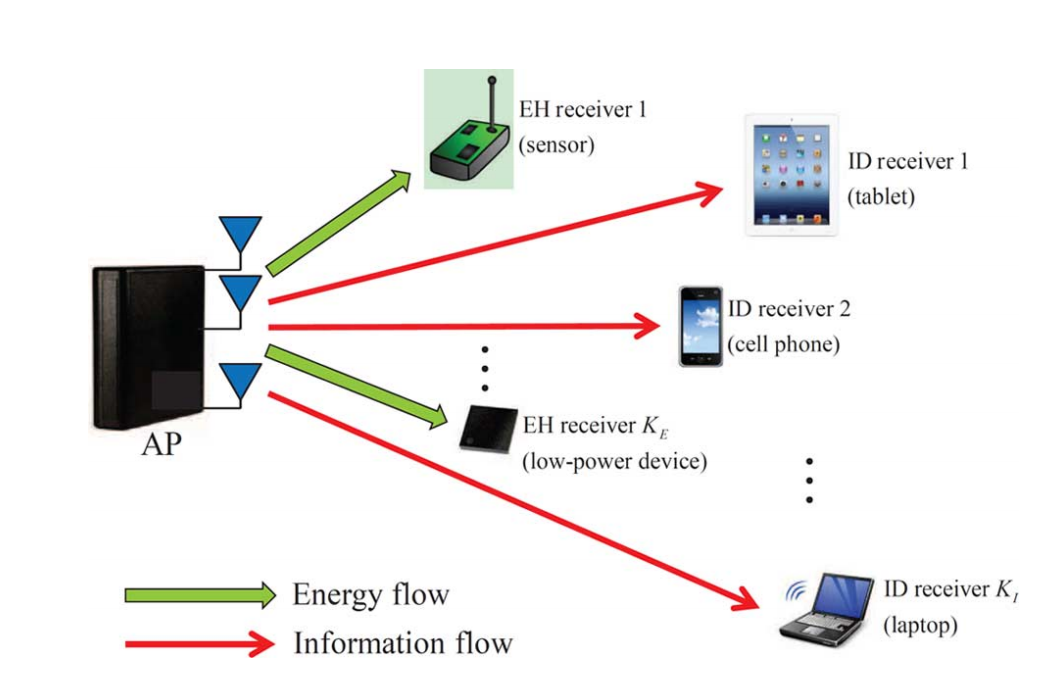
Note that all the analysis is under the assumption of independently distributed user channels.
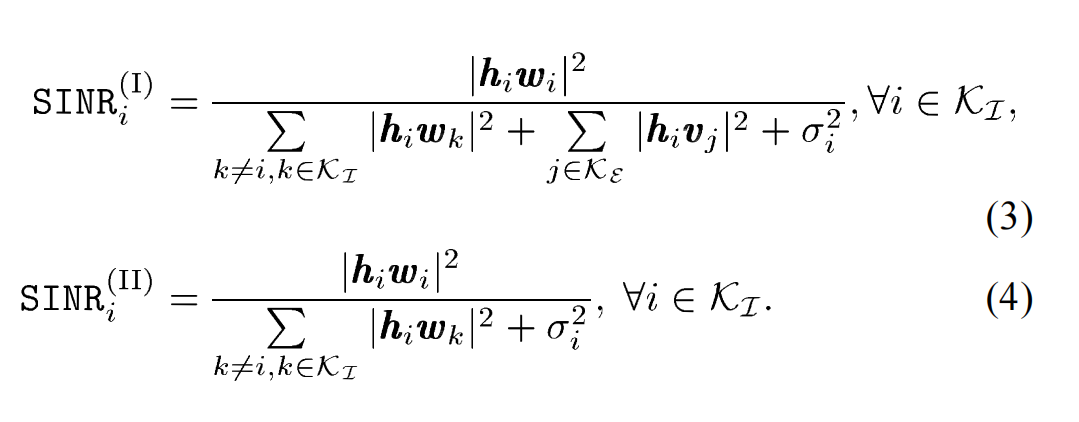
- Type I: without the capability of cancelling the interference from energy signals.
- Type II: with the capability of cancelling the interference from energy signals.
- No dedicated energy beam is used for the case of Type I; and employing no more than one energy beam is optimal.
- Establish a new form of the celebrated uplink-downlink duality for the downlink beamforming problems and thereby develop alternative algorithms to obtain the same optimal solutions as by SDR
System model
the SINR of two types:
The two types can be formulated as:
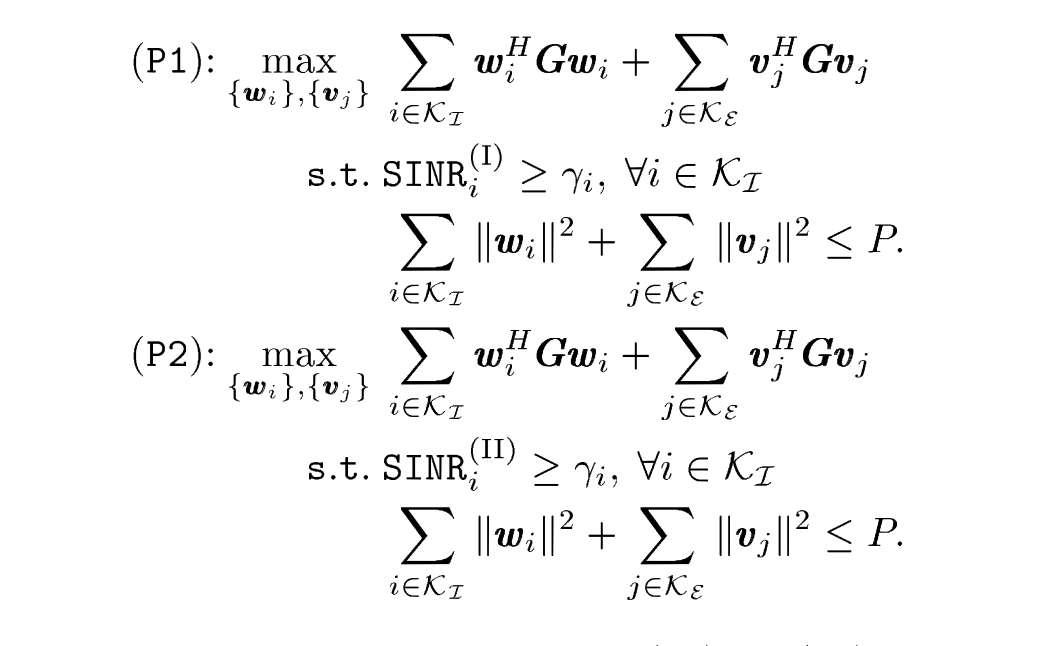
Both problems can be shown to maximize a convex quadratic function with \(\mathbf{G}\) being positive semidefinite, subject to various quadratic constrains; thus they are both non-convex QCQPs.
Check on their feasibility
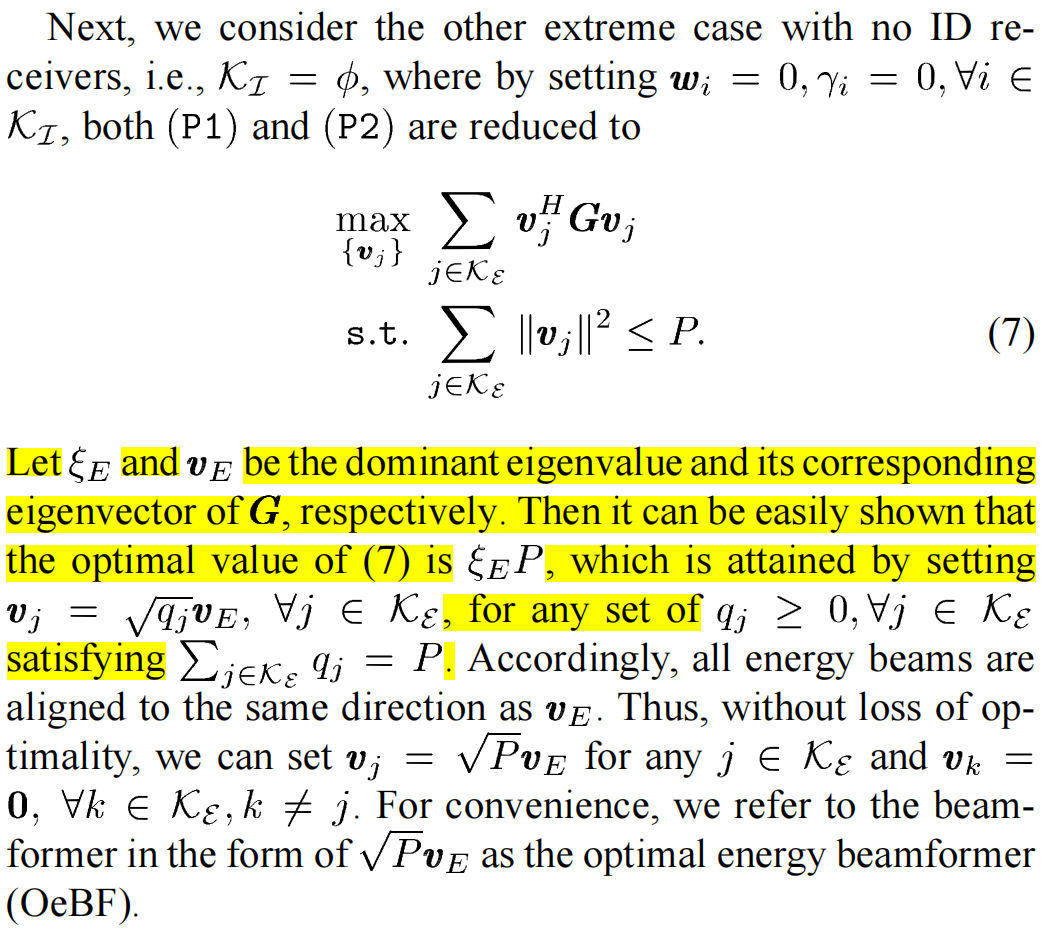
code varify
1 | |
问题的等价

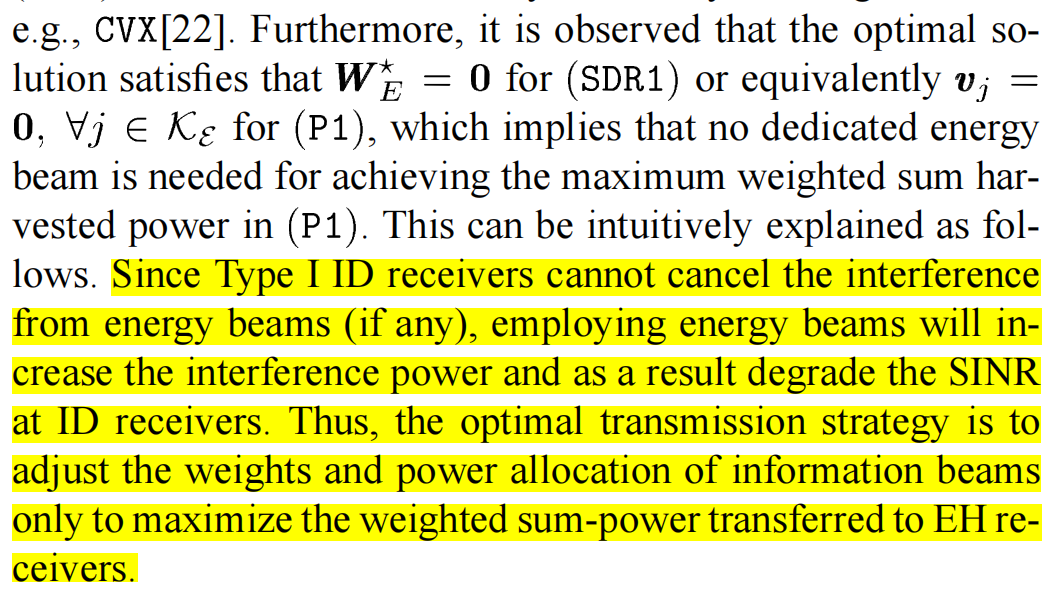
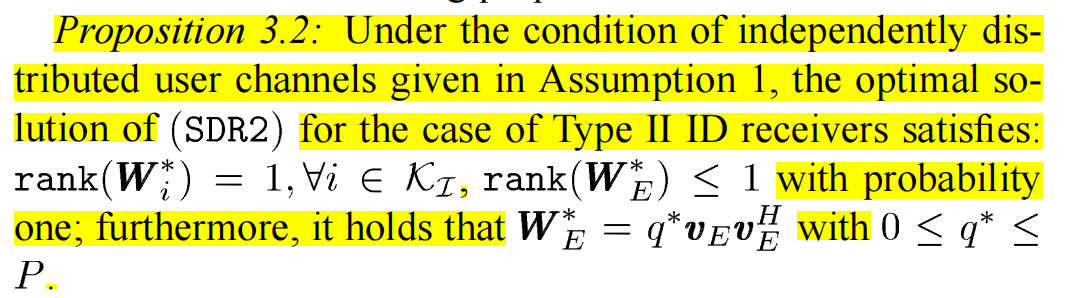
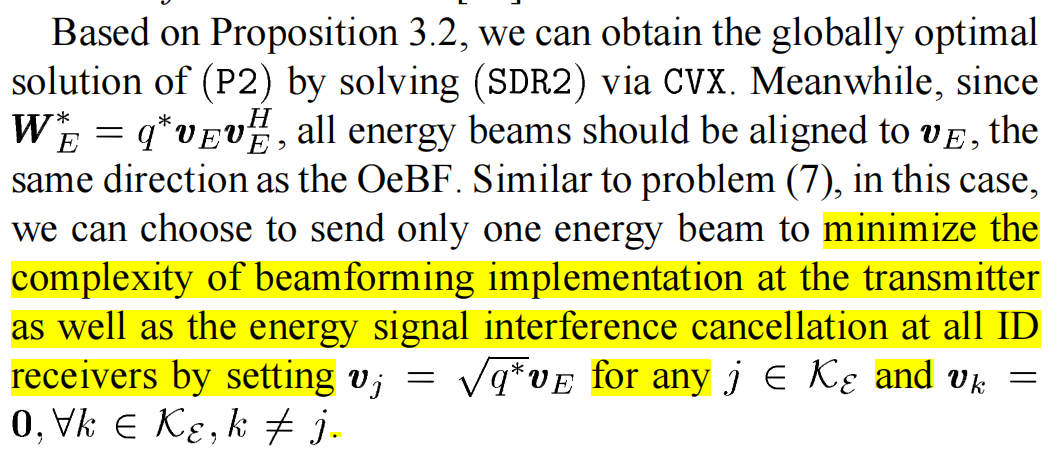
根据等价问题二,可以通过对偶来解决这个问题:
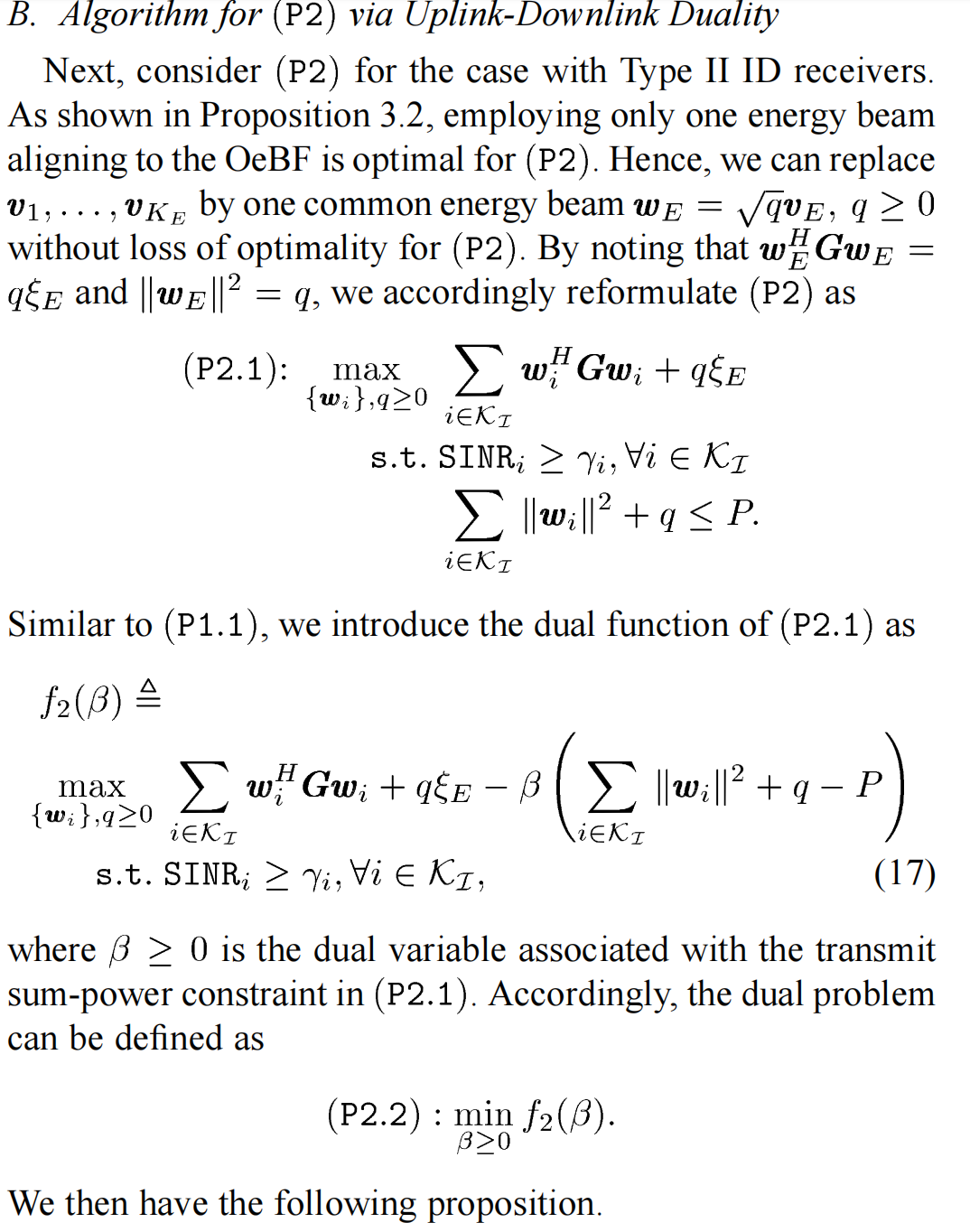
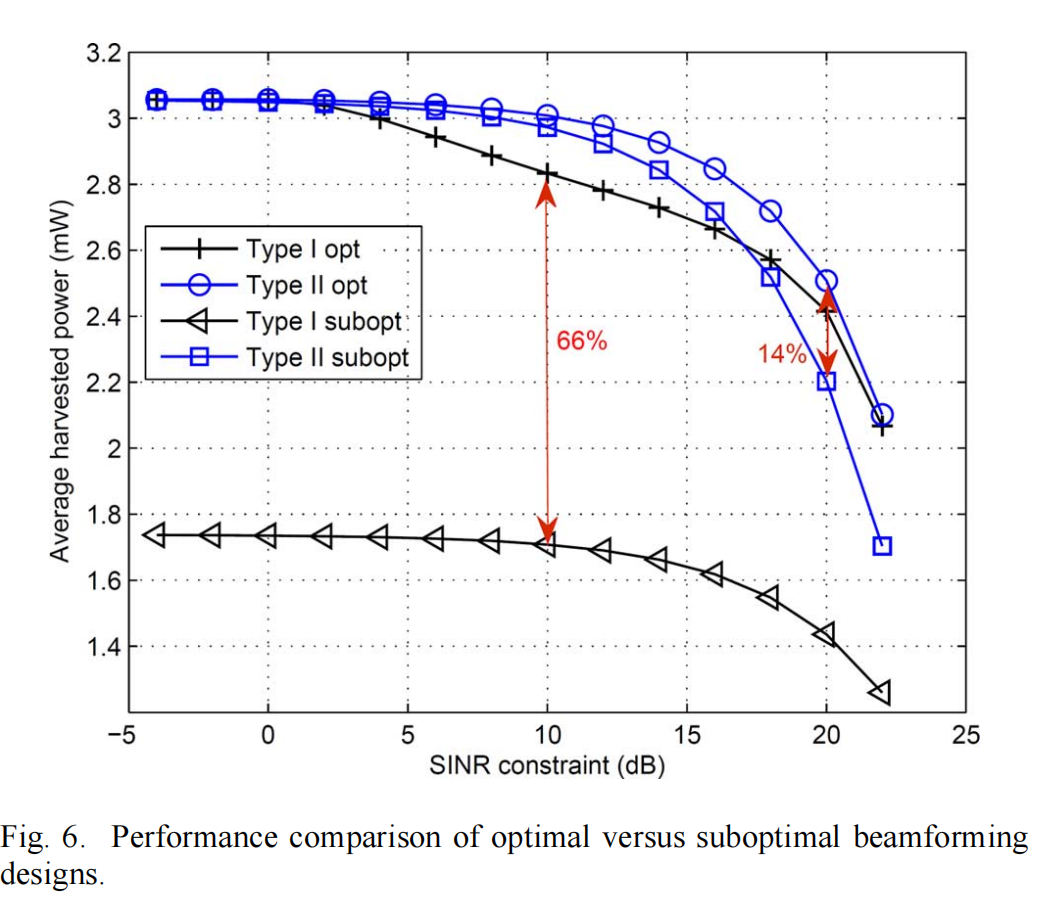
有意思的是,作者还对比了分离式设计:
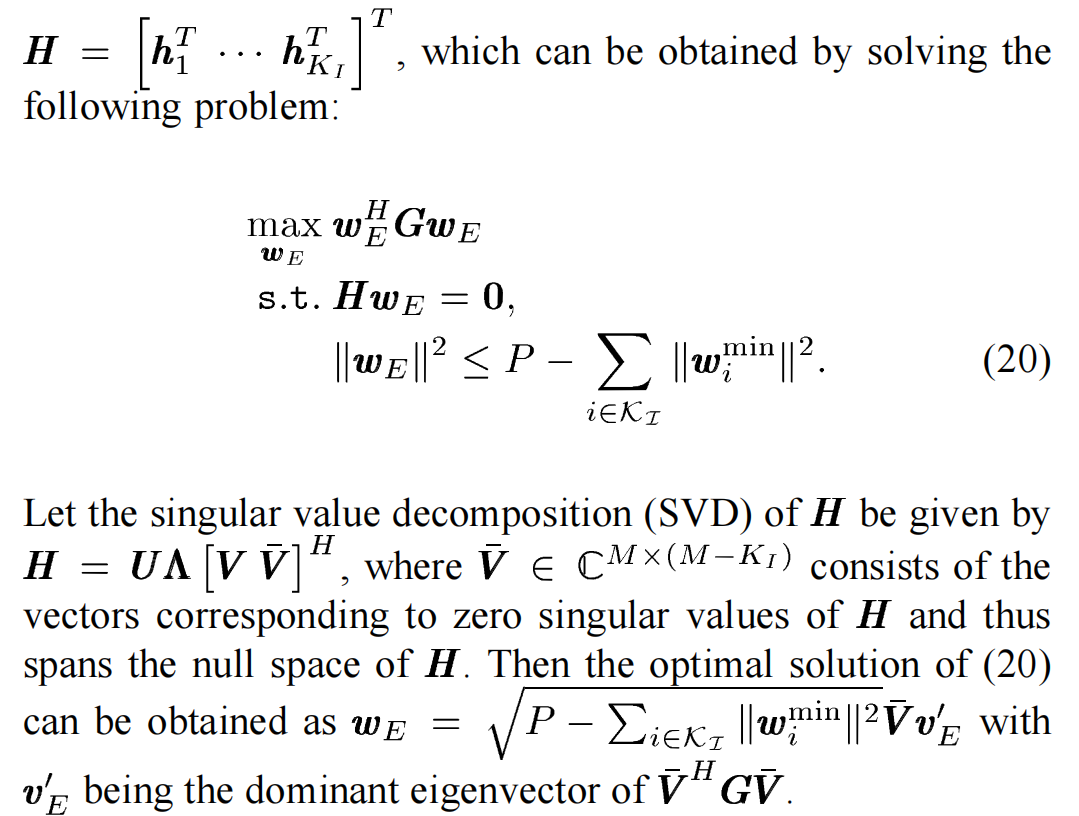
- Type I: 先设计信息用户,再把剩下的功率全部用给能量。由于此时IDs不具备能量信号干扰消除,所以需要在发射端进行消除,所以使用了Null space方案。
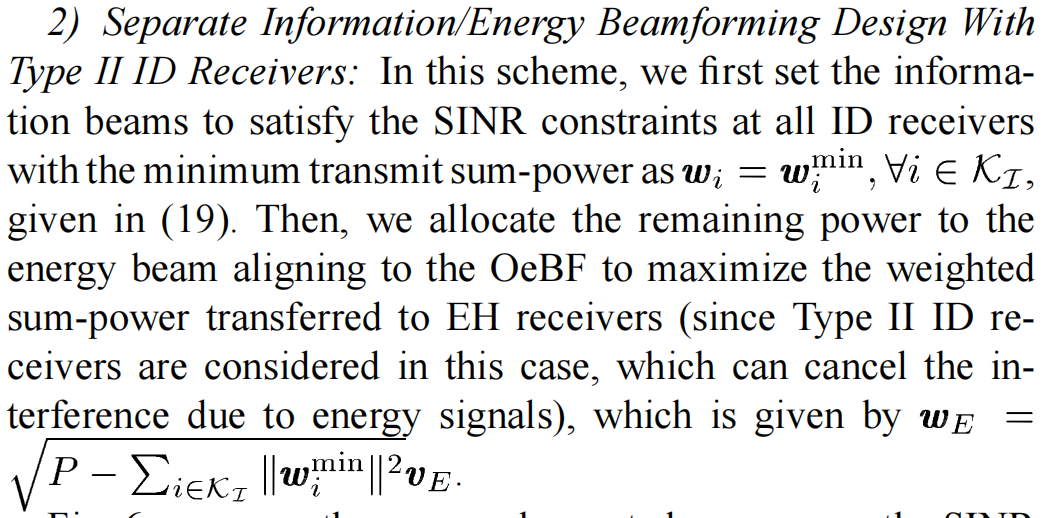
- Type II: 和上面类似,先满足信息用户,然后把剩下的功率全部给能量。由于此时IDs可以消除能量干扰,所以可以直接用OeBF方案。
Two type IDs for SWIPT and only zero or one Energy Beamforming is needed
https://lcjoffrey.top/2024/04/10/dedicatedWETbeamforming/